Death Cleanup
Cleaning a home after someone dies, including fluids, odor and affected belongings.
See death cleanupSort, pack and remove belongings from a home, apartment, garage or storage area in Fox Chase after a death. Important documents and keepsakes are set aside under your instructions.

Once the family or a legal representative is ready to empty a property following a death, the structured sorting, packing and removal of the person's possessions is called an estate cleanout.
The included spaces might be a house, apartment, attic, garage, storage unit or separate building. Before removal, belongings go into the categories you select: retained items, papers to examine, intended donations, recyclables and regular trash. Appliances and furniture may then leave the property, making the rooms empty and ready for their next use.
A home may need general estate sorting without death cleanup if someone died there and bodily fluids did not affect any property. The order changes when the death was unattended or when visible blood, contamination or strong odor is present. Biohazard cleanup then has to happen before surrounding belongings are sorted, helping keep family and every person entering that area safer.
The cleanup service also safeguards belongings that are easy to overlook. For your inspection, set aside cash, medication, keepsakes, photographs, legal documents, keys and jewelry. You may set priorities ahead of the cleanup process and divide decisions into stages when the property holds many items.
As you move forward, photographs, work details and invoices can help with discussions involving relatives, the estate representative or insurance companies.
Before work starts, you confirm each sorting group, important item and part of the removal plan. The plan can pause when a family decision is needed.
Workers use unmarked vehicles, safeguard shared walkways and avoid leaving boxes or bags visible enough to attract unwanted attention.
Photos, documents, valuables and named keepsakes are separated for you to examine instead of being mixed with ordinary removal items.
When belongings must be cleared following a death, estate cleanout services give families, executors, landlords and property owners an orderly approach. Common examples are:
Items outside the home's living rooms, including records, tools, furnishings, chemicals and cartons, require sorting under the agreed plan.
Clearing the belongings requires planning around access, elevators, parking, nearby residents and the landlord's rules.
Large amounts of personal property require a slower room-by-room plan, clear keep lists and attention to blocked paths or hidden hazards.
The home's ordinary contents need sorting, packing and removal following a care-setting death or one witnessed by relatives.
Protect the property at the outset and identify who may make choices on the estate's behalf. Taking these steps before any cleaning service or removal work begins helps keep the process clear:
Call (888) 351-0904Estate cleanout prices listed by the veteranhauling.com cost guide are $1,000 to $3,000 when a smaller home has one to two bedrooms, $3,000 to $7,000 when a mid-size home has three to four bedrooms and $7,000 to $15,000 when a home is large or heavily furnished. For one truckload, its load-based junk removal range begins at $300 and ends at $800 according to that guide. The contents present, needed disposal and property access affect your price.
The figures shown are national ranges from published cost guides and are not based on an on-site visit. You learn what your property will cost after the on-site assessment and before any work begins.
Ask about cost: (888) 351-0904Ordinary estate clearing is not automatically covered by insurance, though cleanup connected with a covered loss may qualify under the policy. Without coverage, payment often falls to the property owner or estate.
Contact the insurance company to confirm coverage for the damage source and any death cleanup or biohazard work, along with the documents needed. Policy terms and the event affect coverage.
The person authorized to manage the estate can ask the appropriate legal or financial professional whether cleanout expenses may be paid from estate funds. Save invoices and removal logs.
Responsibility may turn on the lease language, applicable local requirements and who has authority over the property. Confirm authority before removing a tenant's personal property or changing the unit.
Homeowners or renters insurance, the estate or the property owner usually pays for this kind of cleanup. The Kentucky crime victim compensation program helps only when a crime caused the loss. Contact the program itself to ask if qualifying crime scene cleanup or associated expenses receive coverage. Standard estate cleanout costs may not qualify for the benefit.
You may authorize each part of the cleanout and identify possessions that are never to be taken away. The process uses an orderly sequence beginning with access confirmation and ending with a final walk-through.
You or your representative checks each room, access point and priority item. Mark affected areas and possible hazards ahead of the sorting work.
The sorting categories follow your choices and may cover items to keep, discuss with family, set aside for intended donation, recycle, discard normally or dispose of separately.
Important contents such as identification, financial records, pictures, keys, valuables and listed keepsakes are secured for decisions apart from outgoing items.
When contamination is present, cleanup crews isolate the affected area, wear protective equipment and complete the remediation process before general sorting resumes.
Items you keep are packed by room or category and labeled clearly. Fragile objects and documents are separated so they are easier to examine.
A planned exit path is used to remove authorized furniture, cartons and regular debris. Special contents are directed to their appropriate waste disposal path.
Cleaning of ordinary residue and dust can begin when the rooms are vacant. Before completing odor removal, locate the origin of any smell that remains.
You inspect the cleared rooms, check saved property and note any repair or restoration services needed before the property changes hands.
Call any hour. A specialist in estate cleanout after a death takes your call, explains each step and agrees on a start time with you.
While most belongings in an estate are not biohazardous, risks may still be present in the home and need identification before anyone starts sorting.
Carpet, padding, furniture, drywall or subfloor touched by bodily fluids may need professional cleanup and regulated waste disposal before general contents are moved.
Loose needles, medication, household chemicals, fuel and ammunition need separate decisions. Do not place unknown or sharp items into an ordinary bag by hand.
Every item may carry a memory. You can move forward without hurried choices by writing a keep list and reviewing belongings in small groups.
Can you clean it yourself? Ordinary estate clearing should stop when previously unseen contamination is found. For a small amount of fresh blood on a hard, non-porous surface, use gloves and an EPA-registered disinfectant for the full contact time. The estate work should pause for professional biohazard cleanup if blood soaked into wood, textiles, carpeting or other absorbent material.
No single schedule applies to every estate cleanout. A lightly furnished, smaller property may need only one work period. A full home that the family sorts carefully can take several separate visits, with biohazard cleanup, access constraints or delayed choices making the work longer.
| Scene | Typical time on site |
|---|---|
| A small property where decisions are already settled | Often the shortest schedule |
| Entire house requiring family choices for each room | Often requires several work periods |
| Heavy contents, hazards or unattended death cleanup | Longer and completed in planned stages |
Effective odor removal starts with locating its origin. Removing spoiled food, rubbish and washable belongings can improve routine stale air, but covering a smell with fragrance does not address smoke residue, excess moisture, animal waste or contamination associated with an unattended death.
When biohazard materials are present, source removal comes before air treatment. Cleanable surfaces are treated with an EPA-registered disinfectant for the full label contact time, and contaminated porous materials may need removal. HEPA air scrubbers can capture airborne particles during professional cleanup. The final air quality plan depends on what caused the odor, not how strong a masking product smells.
Do not allow entry or approve selling, donating or removing property without the appropriate authority. Court and estate requirements vary, so ask a qualified local professional when ownership is disputed.
Training, protective gear and safe practices for possible worker contact with blood are addressed by 29 CFR 1910.1030, the OSHA Bloodborne Pathogens Standard.
Kentucky has no single medical waste agency. The Energy and Environment Cabinet's Division of Waste Management permits medical waste transfer stations, and most landfills accept this waste only after treatment, so it should not go in household trash. Household belongings, hazardous chemicals, electronics, needles and contaminated materials may each require a separate waste process.
Kentucky relies on elected county coroners, supported by the Office of the State Medical Examiner, which helps coroners determine cause of death. Cleanup starts after police or the medical examiner or coroner release the scene. Scene cleaning and contents removal must wait for official release of the impacted space during involvement by law enforcement or a medical examiner or coroner.
The full estate cleanout after a death guide covers what is cleaned or removed, odor and air quality work, and the rules that apply in your state.
Read the full estate cleanout after a death guide
Local population patterns, housing and site access may affect how containment and cleanup are planned.
Because renter occupancy is 0.0%, cleanup discussions often can focus on the household without a separate property manager involved.
Because the median home dates to 1980, cleanup plans should distinguish washable surfaces from absorbent carpet, padding, and wallboard.
In Fox Chase, 34 older adults live alone, so relatives may need clear photos and records when managing cleanup from afar.
The local 100.0% single-family share makes household level privacy practical while affected rooms are isolated and treated.
Ask on the call about cleanup options for neighboring communities and ZIP codes.
Cleaning a home after someone dies, including fluids, odor and affected belongings.
See death cleanup
When a death remains undiscovered for days, cleanup addresses decomposition and controls odors.
See unattended death cleanup
Cleanup following a quickly discovered death treats the family home with care.
See attended death cleanup
Decomposition fluids are removed from furniture, flooring and the subfloor beneath it.
See decomposition cleanup
At the source, death odor removal uses air scrubbers plus hydroxyl and ozone treatment.
See death odor removal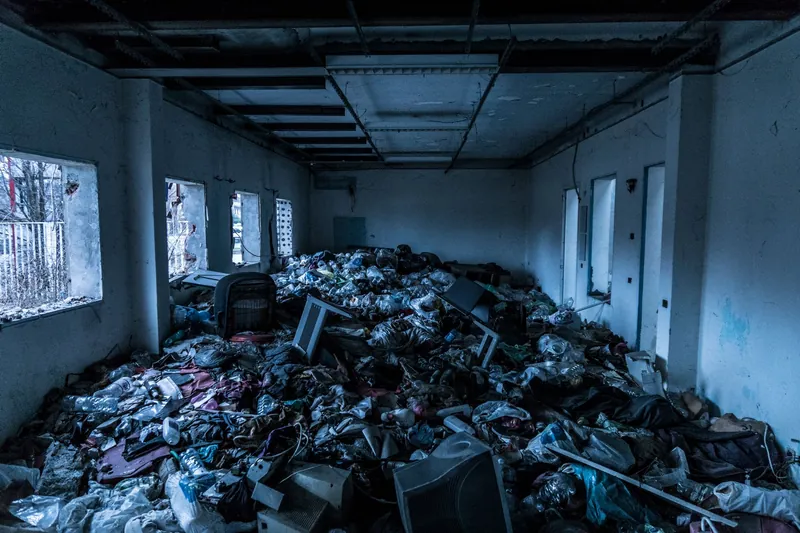
Hoarding cleanup combines respectful sorting, removal and deep cleaning.
See hoarding cleanup
Hoarder house cleanout covers every room from start to finish and includes trash removal.
See hoarder house cleanout
Sealed containers with labels hold biohazard waste during collection and disposal.
See biohazard waste disposalThe cited estate cleanout cost guide shows $1,000 to $3,000 for smaller homes, $3,000 to $7,000 for mid-size homes and $7,000 to $15,000 for large or heavily furnished homes. The final work plan and price depend on belongings, load count, access and special waste needs.
First gather the clearly identifiable items that would be hard to replace, such as identification, legal papers, pictures, keys, jewelry, money, medication and listed mementos. Moving heavy items on your own is unnecessary. To help find meaningful items during sorting, prepare a priority list in advance.
The first property walk-through should include you or someone authorized to act, who can approve the scope and point out meaningful belongings. Once entry arrangements and sorting instructions are established, you might not have to stay through all stages. Set times to discuss uncertain contents so relatives can decide before removal proceeds.
Homeowners insurance does not necessarily pay for routine estate clearing. Depending on its terms, the policy might cover cleaning tied to a covered event, including certain damage related to a death. Contact the insurance company, describe the cause of loss and ask what cleanup, personal property and documentation terms apply.
No. Estate cleaning focuses on belongings and clearing the property. Unattended death cleanup focuses on bodily fluids, contaminated materials, odor and safe waste disposal. When both are needed, cleanup crews complete the affected area's biohazard remediation first, then the general estate cleanout can continue in safe areas.
The decision-maker could be the estate's executor or administrator, a trustee, an owner or another person with legal permission. The applicable process in your area and estate records control the answer. When relatives disagree or no one is sure who can act, pause removal and consult a qualified local probate professional before personal property leaves.
Respectful, discreet estate cleanout after a death is available 24 hours a day, and crews arrive in unmarked vehicles.